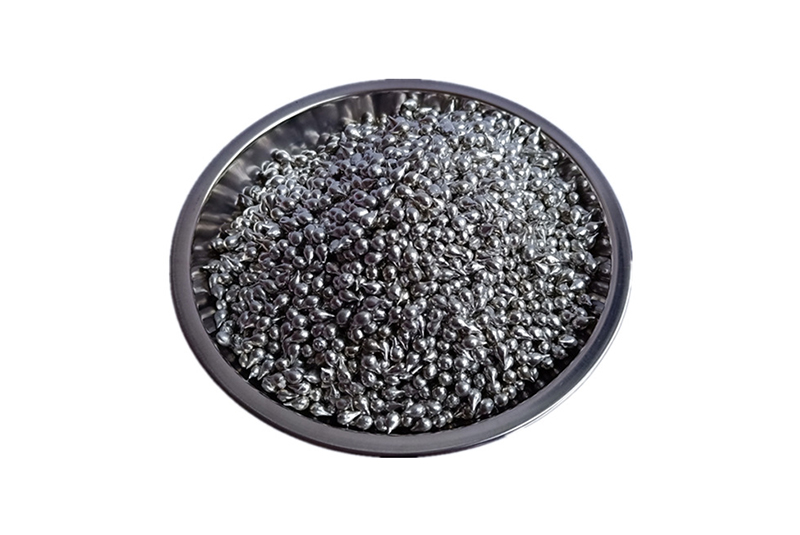
|
Material Name |
Tin |
|
Molecular Formula |
Sn |
|
CAS.No |
7440-31-5 |
|
Molecular Weight |
118.701 |
|
Density |
7.3 g/cm3 |
|
Fusing Point |
231.9 ℃ |
|
Boiling Point |
2270 ℃ |
|
Solubility (water) |
Soluble in concentrated hydrochloric acid, sulfuric acid, aqua regia, concentrated nitric acid, hot caustic soda solution, slowly soluble in cold dilute hydrochloric acid, dilute nitric acid and hot dilute sulfuric acid, cold caustic soda solution, in acetic acid more slowly dissolved. Insoluble in water. |
Ⅰ、Electronic Field
Tin particle is one of the most important materials in the field of electronics. Tin particles are often used in electronic components to make solder joints, and tin particles can act as a kind of adhesive to make a solid connection between electronic components. At the same time, tin particles are also used to manufacture electronic carriers, such as microcontroller panels, crystal oscillators, capacitors and other electronic components, which can be seen everywhere in our daily life.
Ⅱ、Manufacturing Field
Another application area for tin granules is manufacturing. Tin particles can make transparent conductive films, which are widely used in solar cells, touch screens, liquid crystal displays and other fields. In addition, tin particles can also be made of alloy materials, such as packaging materials, sports equipment, auto parts, ships and so on.
Ⅲ、Environmental Protection Field
Tin particles are also widely used in the field of environmental protection. Tin particles can be used to make environmentally friendly paint, which is less polluting to the environment, while saving energy in the production process, which can well protect the environment. Tin particles can also be used in waste water treatment, flue gas purification, waste gas treatment and other environmental protection technologies.