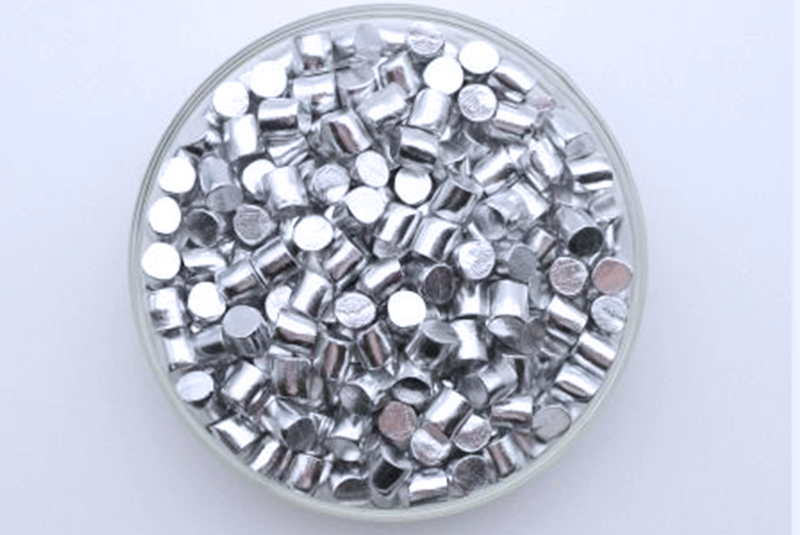
|
Material Name |
Aluminium |
|
Molecular Formula |
Al |
|
Product Specification |
Grain, silk |
|
Molecular Weight |
26.98 |
|
Density |
2.7g/mL |
|
Refractive Index |
1.3-17.11(650nm) |
|
Fusing Point |
660℃ |
|
Evaporation Temperature |
1000-1100℃ |
Additive Manufacturing (3D Printing)
Material selection criteria: In additive manufacturing, there are strict requirements for the particle size, shape and fluidity of the material. Aluminum particles need to have good fluidity and high printing accuracy to meet the printing needs of fine and complex structures.
Application Cases and effect evaluation: Aluminum particles are widely used in 3D printing of aerospace components, automotive parts and medical devices, which significantly improve the performance and reduce the weight of the finished product by virtue of the advantages of light weight and high strength. Through case studies, we can see the contribution of aluminum particles in improving printing efficiency and product performance.
High Performance Coatings And Pigments
Role in coatings: Aluminum particles provide reflectivity, electrical conductivity and corrosion resistance in coatings, making them ideal for manufacturing high-performance coatings.
Innovative application cases: Reflective coatings for automotive, aircraft and building facades not only improve aesthetics, but also reduce internal temperatures by reflecting sunlight to achieve energy savings. The case study shows that the addition of aluminum particles greatly expands the application range and performance of coatings.
Powder Metallurgy And Composite Materials
Aluminum particle reinforced composites: Through aluminum particle reinforced, the strength, wear resistance and thermal conductivity of the composite material are significantly improved, which is used in automotive, aerospace and electronic packaging.
High performance applications: In high performance applications, such as spacecraft structural components and brake systems for high-speed automobiles, the application of aluminum particles greatly improves the performance and reliability of the material.
Energy Field
Solar panels: Aluminum particles are used in the reflector of solar panels, which improves the photoelectric conversion efficiency and weather resistance, and promotes the development and application of solar energy technology.
Energy storage materials: In energy storage materials, aluminum particles are used to make efficient energy storage systems, such as batteries and supercapacitors, due to their good electrical conductivity and chemical stability.