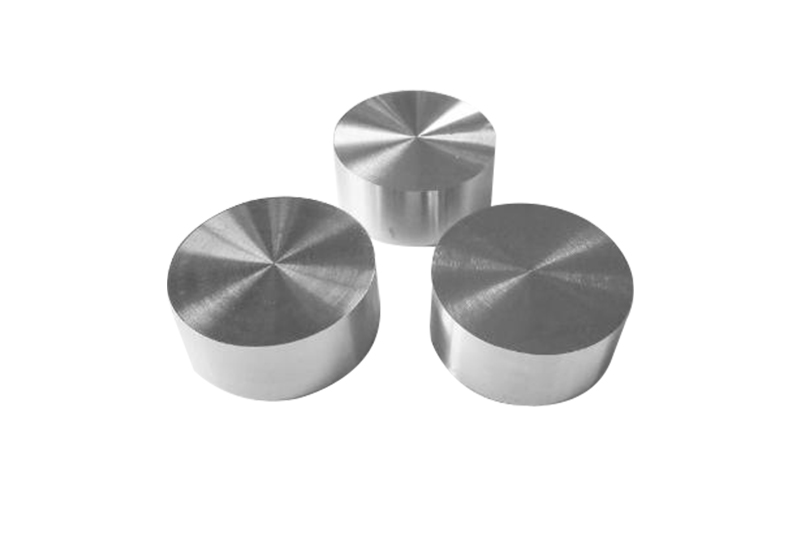
|
Material Name |
Ruthenium |
|
Molecular Formula |
Ru |
|
CAS.No |
7440-18-8 |
|
Molar Mass |
101.07 |
|
Density |
1.02 g/cm³ |
|
Fusing Point |
2310 ℃ |
|
Boiling Point |
3900 ℃ |
|
Flash Point |
134.3 ℃ |
|
Stability |
Insoluble in acid and aqua regia, can form alloys with platinum, palladium, cobalt, nickel and tungsten, and become fixed compounds with zinc and tin. |
1. In the electronics industry, when used as a barrier layer for manufacturing chips, a high-purity ruthenium target should be selected, and the temperature and thickness during the coating process should be controlled to maintain the integrity and performance of the circuit.
2. In the field of medical imaging, when using ruthenium targets, the key is to ensure that the targets can withstand continuous high-energy particle impacts without damage, so it is recommended to use ruthenium targets with good crystallization and high thermal stability.
3. For physics research, such as in particle accelerators, it is recommended to use ruthenium targets with high purity and uniform structure to minimize unnecessary background noise and improve the accuracy of experimental data.
4. In chemical catalysis, select a ruthenium target suitable for a specific chemical reaction, while considering catalytic efficiency and durability to ensure a long-term continuous reaction.