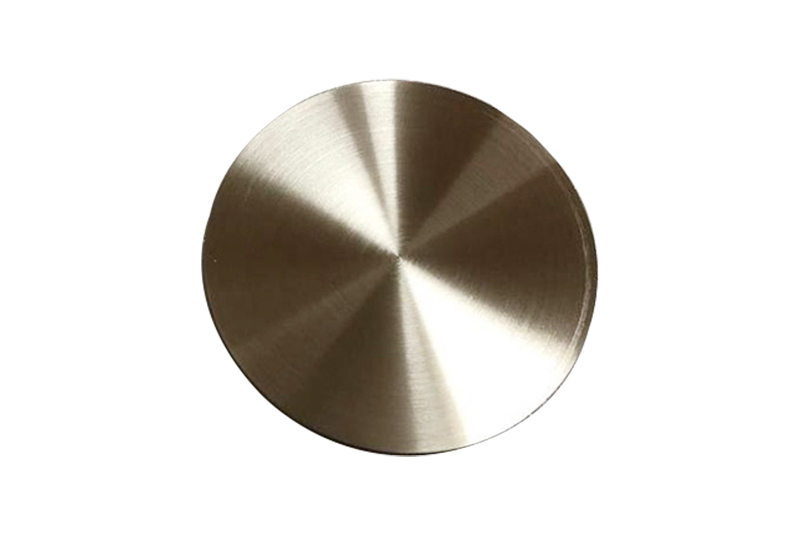
|
Element Introduction |
Elemental Property |
||
|
Chinese Name |
Molybdenum |
Coefficient of Expansion |
(25℃)4.8μm·m-1·K-1 |
|
Molecular Formula |
Mo |
Thermal Conductivity |
138W·m-1·K-1 |
|
CAS.No |
7439-98-7 |
Electrical Resistivity |
(20℃)53.4nΩ·m |
|
State of Matter |
Solidity |
Young's Modulus |
329GPa |
|
Density |
1028·cm³ |
Shear Modulus |
126 GPa |
|
Boiling Point |
2623℃ |
Bulk Modulus |
230 GPa |
|
Fusing Point |
4639℃ |
Mohs Hardness |
5.5 |
|
Heat of Fusion |
37.48 kJ·mol-1 |
Brinell Hardness |
1500Mpa |
|
Heat of Vaporization |
598 kJ·mol-1 |
Magnetic Sequence |
Paramagnetism |
|
Specific Heat Capacity |
24.06 J·mol-1·K-1 |
Crystal Structure |
Body-centered cube |
1. Medical Field
Molybdenum targets are mainly used in the medical field of X-ray generators, CT machines, nuclear magnetic resonance imaging equipment, etc., for generating high-energy X-rays to help doctors diagnose and treat. It has the advantages of light weight, high radiation intensity and stable energy. For example, the architectural design of a CT machine often includes a tungsten stopper, while the target material in an X-ray tube is usually molybdenum.
2. Materials Science, Chemistry And Physics
Molybdenum targets are also widely used in materials science, chemistry and physics, such as growing semiconductor crystals, preparing chemical vapor deposition (CVD) films, and analyzing microstructure materials. These applications often require the production of high-energy X-rays for research or use as detector materials. Molybdenum targets are widely used in these fields because of their high energy and long half-life.