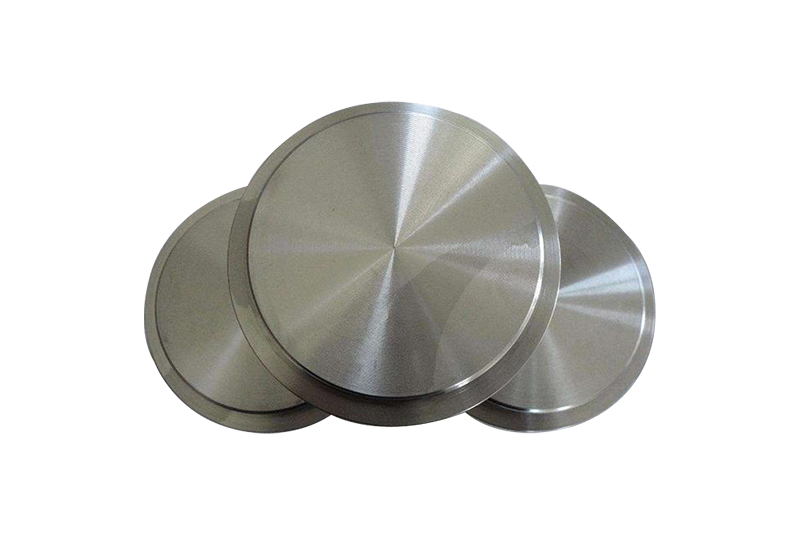
Chromium is a silver-white glossy metal, pure chromium is malleable, and chromium containing impurities is hard and brittle. The relative density is 7.15g/cm³, the melting point is 1907℃, and the boiling point is 2679℃. The electrical resistivity is 12.7x10⁻⁸Ω·m (20℃).
Chromium has a high corrosion resistance, and oxidation is slow in air, even in a state of red heat. Insoluble in water. Plating on metal can provide protection.
|
Element Introduction |
Elemental Property |
||
|
Chinese Name |
Chromium |
Coefficient of Expansion |
(25℃)4.9μm·m-1·K-1 |
|
Molecular Formula |
Cr |
Thermal Conductivity |
93.9W·m-1·K-1 |
|
CAS.No |
7440-47-3 |
Electrical Resistivity |
(20℃)125nΩ·m |
|
State of Matter |
Solidity |
Young's Modulus |
279 GPa |
|
Density |
7.19g·cm³ |
Shear Modulus |
115 GPa |
|
Boiling Point |
1907℃ |
Bulk Modulus |
160 GPa |
|
Fusing Point |
2671℃ |
Mohs Hardness |
8.5 |
|
Heat of Fusion |
21.0 kJ·mol-1 |
Brinell Hardness |
1120Mpa |
|
Heat of Vaporization |
339.5 kJ·mol-1 |
Magnetic Sequence |
AFM |
|
Specific Heat Capacity |
23.35 J·mol-1·K-1 |
Crystal Structure |
体心立方 |
Semiconductor Industry
Thin film deposited materials: Chromium targets play a crucial role in semiconductor manufacturing, especially in the production of integrated circuits (ics). As an ideal metal conductor, chromium is widely used to deposit thin films for making conductive paths and connections for microelectronic devices.
Performance improvement: The use of chromium targets significantly improves the overall performance of semiconductor devices by optimizing the electrical conductivity and stability of the circuit. In addition, the high heat resistance and excellent chemical stability of chromium films also greatly enhance the reliability and durability of semiconductor products.
Photovoltaic Industry
Solar panel manufacturing: In the production of solar panels, chromium targets improve the efficiency of solar energy conversion by improving the light absorption rate of the cell and reducing the surface reflectivity. This is of great significance for increasing the power generation of solar panels and reducing energy costs.
The impact of efficiency and life: chromium targets not only improve the efficiency of photovoltaic cells, but also effectively extend the service life of the panels due to its excellent corrosion resistance and stability, thereby improving the overall cost performance of the photovoltaic system.
Decorative and Protective Coating
Automotive and construction: In the automotive and construction industries, chromium targets are used to produce metal films with decorative effects. These chrome films not only provide attractive shine and color, but also provide additional protection against corrosion, enhancing the appearance of the product and its durability.
Improved product durability: The wear and corrosion resistance of various products can be significantly improved by using coatings prepared with chromium targets. This is particularly important in demanding industrial applications, such as surface treatment of mechanical equipment used in harsh environments.