|
Element Introduction |
Elemental Property |
||
|
Chinese Name |
Titanium |
Coefficient of Expansion |
(25℃)8.6μm·m-1·K-1 |
|
Molecular Formula |
Ti |
Thermal Conductivity |
21.9W·m-1·K-1 |
|
CAS.No |
7440-32-6 |
Electrical Resistivity |
(20℃)0.42nΩ·m |
|
State of Matter |
Solidity |
Young's Modulus |
116 GPa |
|
Density |
4.506·cm³ |
Shear Modulus |
44 GPa |
|
Boiling Point |
166℃ |
Bulk Modulus |
- |
|
Fusing Point |
3287℃ |
Mohs Hardness |
6.0 |
|
Heat of Fusion |
14.15 kJ·mol-1 |
Brinell Hardness |
716Mpa |
|
Heat of Vaporization |
425 kJ·mol-1 |
Magnetic Sequence |
Paramagnetism |
|
Specific Heat Capacity |
25.06 J·mol-1·K-1 |
Crystal Structure |
Hexagonal close packing |
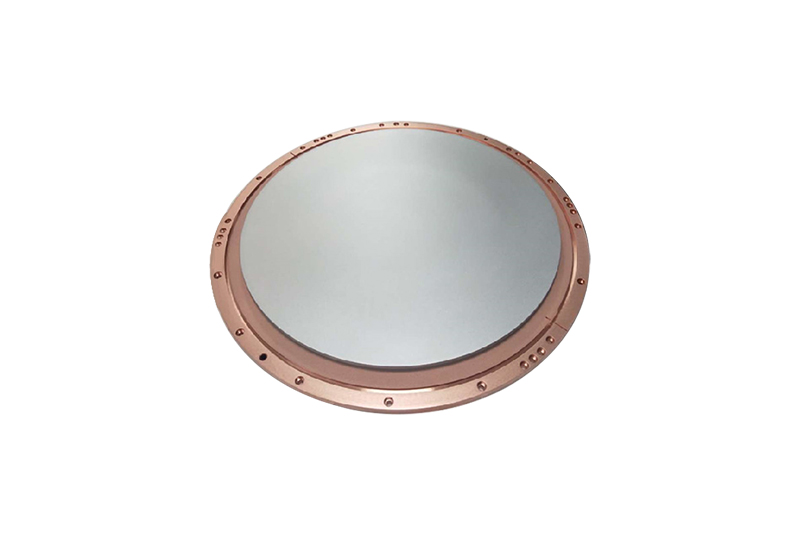
High purity titanium is mainly used as a semiconductor material and an aspirating material in ultra-high vacuum devices. High purity titanium has inspiratory properties, especially hydrogen, CH4, Co2 gas, so it can be widely used in high vacuum and ultra-high vacuum systems. When the wire mesh is made with high-purity titanium sputtering, these integrations can be exceptionally light, thin, small in size, and line dense. High purity titanium targets can also be used as barrier layer metal materials.
Applications: Scientific experimental research applications, nano-processing, device manufacturing and other related products, widely used in flat display, semiconductor, solar cells, optical components, energy-saving glass and other fields.